Despite the rise of 3D rendering and virtual reality walkthroughs, physical architectural scale models still anchor real estate marketing and development. The reason comes down to basic human psychology: tangible, physical objects command a level of trust and engagement that digital screens cannot replicate.
The Physical Anchor in a Digital World
When selling luxury real estate or pitching high-stakes commercial investments, trust is the primary currency. Digital renders, while beautiful, are often viewed with a degree of skepticism due to their hyper-idealized lighting and "perfect" angles. A physical scale model sits in the room with the decision-maker. It is undeniable, tactile, and rooted in physical space.
Accelerating the Decision-Making Process
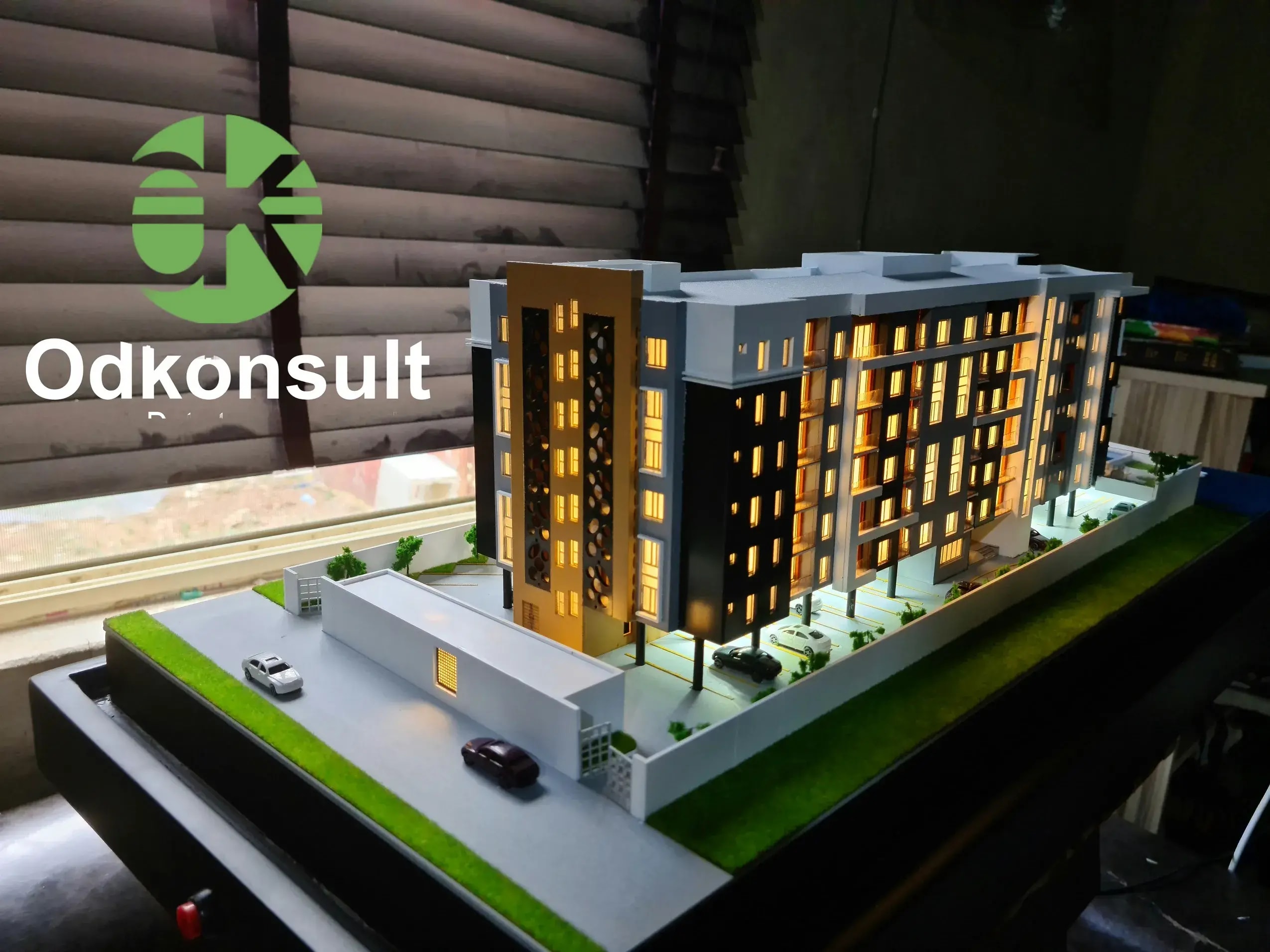
In sales galleries across Nigeria and the world, the centerpiece is invariably the architectural model — it anchors the space, giving every other element in the room something physical to orient around.
- Instant Spatial Comprehension: A flat floor plan requires the brain to decode lines into 3D spaces. A physical model bypasses this cognitive load, immediately conveying proportion, scale, and mass.
- Communal Viewing: A digital walkthrough is typically a solitary experience (one person using a mouse or VR headset). A physical model allows an entire board of directors or a family to gather around, point, discuss, and build consensus simultaneously.
Bridging the Communication Gap
Architects use specialized language and complex drawings that often alienate laypeople. For a developer trying to secure funding from non-technical stakeholders, that gap matters. ODK Models closes it by translating complex technical datasets into physical representations anyone can read at a glance.
A scale model shifts the client conversation from "What will this look like?" to "Which unit is mine?" — from imagining the project to deciding whether to buy into it.